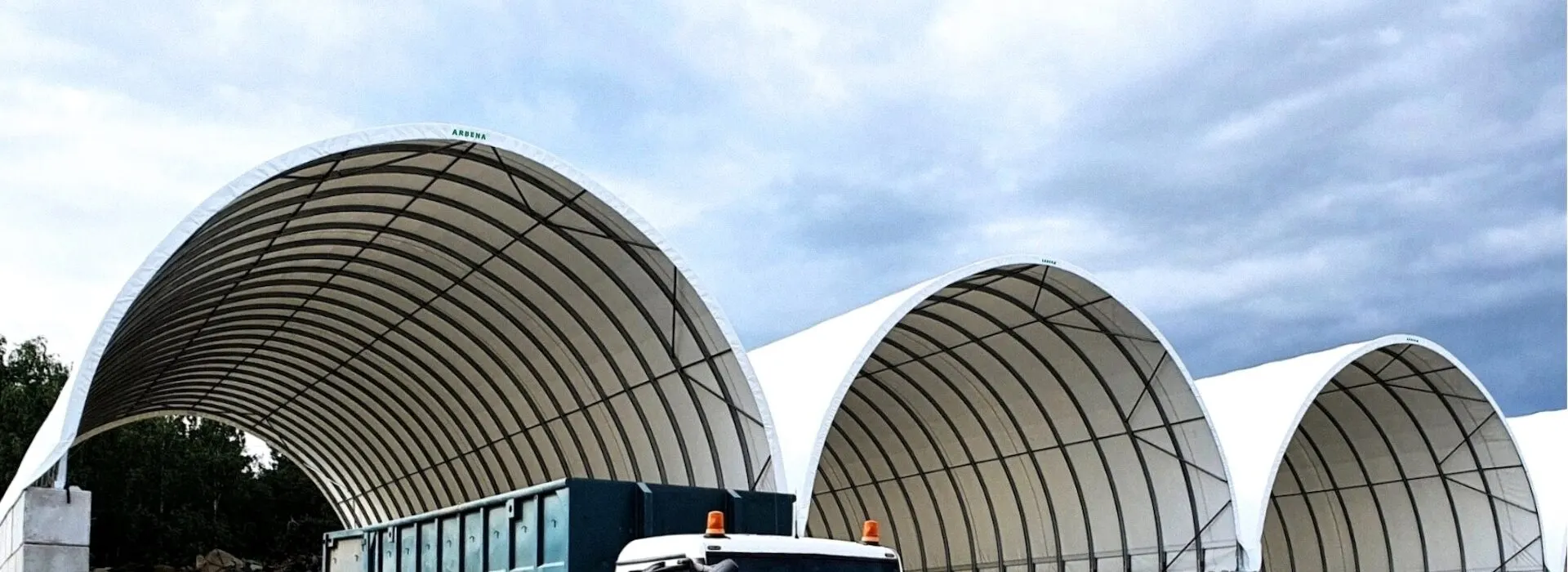
Fabric buildings are used across industry, agriculture and logistics because they go up quickly and cost less than a conventional building. The question every buyer eventually asks is how long one will last. The honest answer is that it depends on three things: the materials, the loads the structure was designed for, and how the building is maintained. This article looks at each of them.
Materials and structure
The service life of a fabric building is set first by what it is made of. Both the covering and the load-bearing frame have to suit the way the building will be used.
The covering: PVC, PTFE or ETFE
- PVC-coated polyester is the most common covering for industrial and agricultural buildings. It is weather-resistant, flexible, relatively affordable and easy to repair. How long it lasts depends on its weight, its protective coatings (such as a PVDF lacquer) and its exposure.
- PTFE is a premium material with very high resistance to UV radiation, temperature, chemicals and biological growth. It lasts longer, but costs considerably more.
- ETFE is light and transmits daylight very well, but its cost means it is used mainly in membrane architecture rather than in storage buildings.
ARBENA buildings use a 670 g/m² PVC-coated PES membrane as standard, with a 650 g/m² fire-retardant version available. The membrane carries a 10-year warranty under the applicable terms; its actual service life can be longer in suitable conditions and with regular maintenance.
Steel or aluminium frame
A steel frame is heavier and stiffer, and copes well with snow and strong wind. For a building that has to work all year round and for many years, steel with proper corrosion protection is the safer choice. ARBENA frames use HX420 structural steel with a Magnelis® protective coating.
Aluminium is lighter and quicker to transport and assemble, which is why it is popular for events and seasonal cover. It does not rust, but it does not offer the same load capacity as steel.
What wears a fabric building out
Good materials are not enough if the building is exposed to conditions it was not designed for. In practice, four factors matter most.
Snow, rain and wind
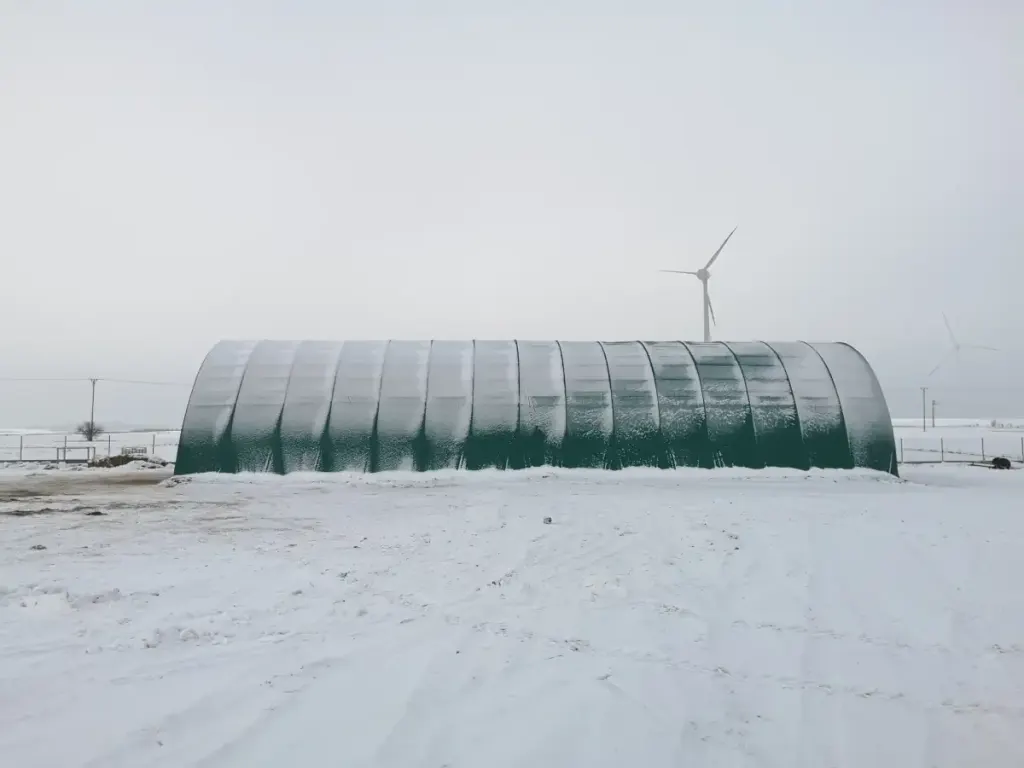
Wet, heavy snow is the biggest test for any building. If the structure was not designed for the snow load at its location, it can deform or fail. Strong gusts are just as serious, so the building has to be properly anchored. Ask the manufacturer which snow and wind loads the design is based on: it is a real safeguard, not a formality.
Rain seems harmless, but long-term moisture affects the indoor climate, encourages mould and speeds up wear of the covering, especially when the building is not ventilated.
UV radiation and temperature
Snow and wind are seasonal, while UV radiation works every day of the year and gradually weakens an unprotected covering. Heat can make a membrane stretch and sag, and severe frost makes it stiff. A covering with good UV and temperature resistance pays for itself over the years.
Every ARBENA building is designed for the snow and wind loads at its own site. You can read more about this on our technology page.
Maintenance that extends service life
A fabric building can serve for many years of intensive use, but how many depends largely on its owner. Regular maintenance in line with the manufacturer’s instructions matters; neglect can lead to damage and may affect the warranty.
Typical damage and how to avoid it
- Membrane damage such as abrasion, tears or overstretching usually comes from machinery or from tension that has not been checked. Check the membrane tension at least twice a year and re-tension it if needed.
- Chemicals such as solvents, strong detergents, industrial fumes or alkaline dust can destroy the protective coating. Keep them away from the membrane.
- Cleaning should be gentle: mild non-ionic detergents, a soft sponge and lukewarm water, no more than two or three times a year, and no pressure washers.
- Biological growth: a biocide every three years keeps the covering clean, with an algicide where moss or algae appear.
Refurbishing an older building
A building does not have to be replaced after a few years. If the frame is sound and the wear is mainly in the covering, locks or fittings, refurbishment is usually the better option. It can include:
- a new covering,
- additional ventilation or roof lights,
- better gates, gable walls or insulation.
Refurbishment costs much less than a new building and works especially well where the use of the building stays the same.
A seasonal checklist
Spring and summer
- Clean the covering with lukewarm water and a mild detergent to remove dirt, algae and mould left after winter.
- Check and adjust the membrane tension.
- Check the skirts and flaps at ground level.
- Inspect cables, bolts, fixings and connectors.
- Check the anchoring (ground anchors, screws and clamps) and tighten or replace parts if needed.
- Inspect the frame for corrosion, dents or loose tubes; clean any rust, treat it and protect it with anti-corrosion paint.
Autumn and winter
- Seal any leaks and make sure the covering is held tightly to the ground.
- Where the membrane edge is buried, compact the soil and top it up where it has settled.
- In areas with heavy snowfall, plan for clearing snow from the roof so that the structure is not overloaded.
- In coastal or industrial environments, rinse steel parts regularly with fresh water and protect them against rust.
Summary
The durability of a fabric building depends on the quality of its materials and design, but just as much on how it is used and maintained. Regular inspections, gentle cleaning and a quick response to the first signs of wear make a real difference to how long the building serves.
Planning a building for a specific site? Tell us the location, intended use and approximate dimensions, and we will suggest a configuration designed for the local snow and wind loads.