A sudden rise in orders and no space to grow
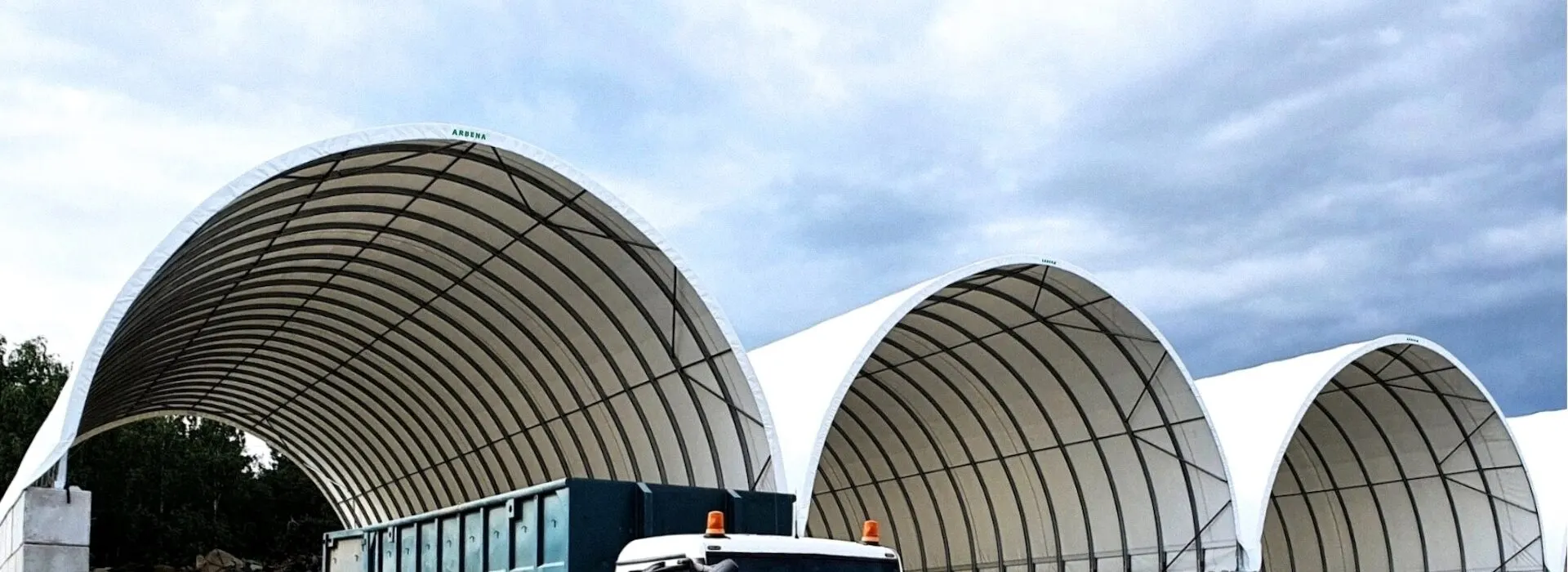
Changing markets, unstable supply chains and sudden increases in orders leave many plants with the same problem: not enough space. Conventional construction rarely keeps pace with the business, so more companies turn to alternatives. Arch-shaped fabric buildings have become a practical way to keep production running and protect materials and processes.
In many sectors, extra capacity is needed at short notice: a new contract, seasonal peaks, reorganised production lines or a delayed permanent investment. Without space, these situations quickly turn into operational losses.
A fabric building can add floor area quickly, whether as storage or production space. It works well as buffer storage, as space for a new production line, or as interim cover while a plant is being extended. Because the structure is modular, it can later take on other roles as the company’s needs change.
Installation time compared with conventional construction
Time is one of the biggest advantages. A conventional industrial building usually takes months from start to finish, while a fabric building is typically installed in a few days to a few weeks, depending on its size and equipment.
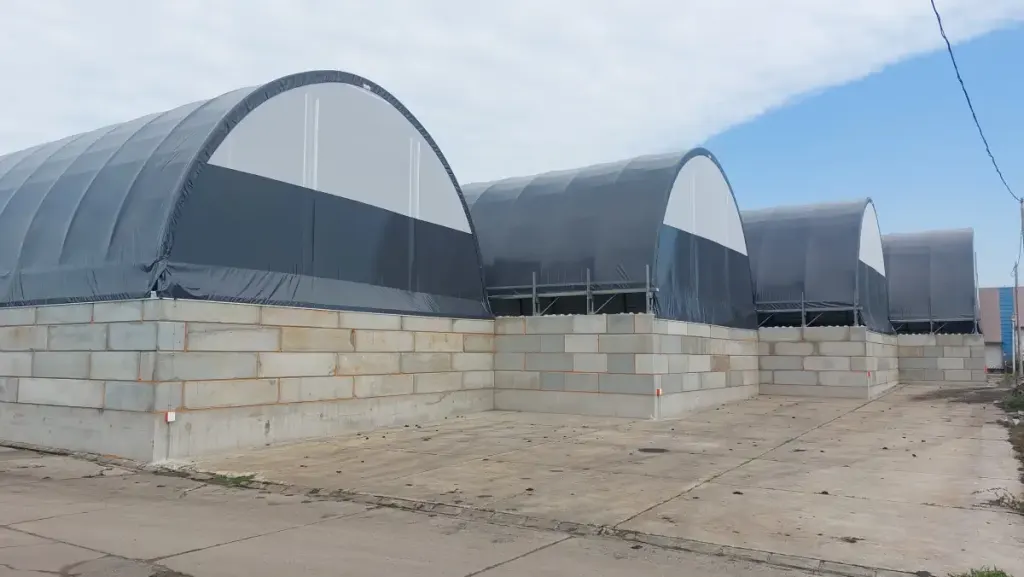
An ARBENA building can also stand on supports that are not permanently fixed to the ground, for example:
- walls made of interlocking concrete blocks,
- shipping containers, which act as side walls and technical space at the same time,
- hardstanding, concrete slabs or asphalt.
This avoids the need for conventional foundations and shortens the work on site. The ground and the anchoring still have to be assessed for each project: no conventional foundations does not mean no ground assessment.
Construction and performance of an industrial fabric building
A modern industrial fabric building has little in common with a makeshift structure. The steel frame is designed to the applicable load standards for the site and is built for safe, long-term use.
Thermal and acoustic insulation
Depending on the use, a building can be fitted with insulation layers, a double PVC membrane or sandwich-panel walls. These options reduce heat loss and condensation and improve acoustic comfort, which matters in production halls running several shifts.
Snow and wind loads
Temporary does not mean unstable. ARBENA buildings are designed for the snow and wind loads at their location, and the covering and anchoring are selected to match. This allows year-round use without seasonal restrictions.
Utilities inside the building
A fabric building can be connected to the plant’s infrastructure: electrical installations, industrial lighting, heating, mechanical ventilation, compressed air or process media. Industrial gates, loading docks and safety systems can also be added, so the building works as a full part of the site.
Flexibility and scalability
A key advantage is modularity. The building can be extended by further bays, reconfigured or moved to another location. For industry, this means responding to market changes without the cost of rebuilding a permanent structure.
Fabric buildings also work well as an interim solution, for example during a plant modernisation, the introduction of new technology or the reorganisation of production. See also our temporary warehouse buildings and solutions for industry and manufacturing.
Permits and local regulations
Whether a building is treated as temporary or permanent, and which procedure applies, depends on the country and often on the municipality. In many places a structure intended for a limited period follows a simpler procedure than a permanent building, but the rules differ. Check the requirements with the local authority early; we can provide the technical documentation needed for the application.
Can a temporary building become a long-term solution?
Although the word temporary suggests a short-term use, well-designed fabric buildings often stay in service at industrial sites for many years. Their durability, the option to upgrade them and their resistance to weather mean that for many companies they become part of the permanent infrastructure.
Need extra space quickly? Send us the location, intended use and approximate dimensions, and we will propose a configuration for your site.