What is a container canopy?
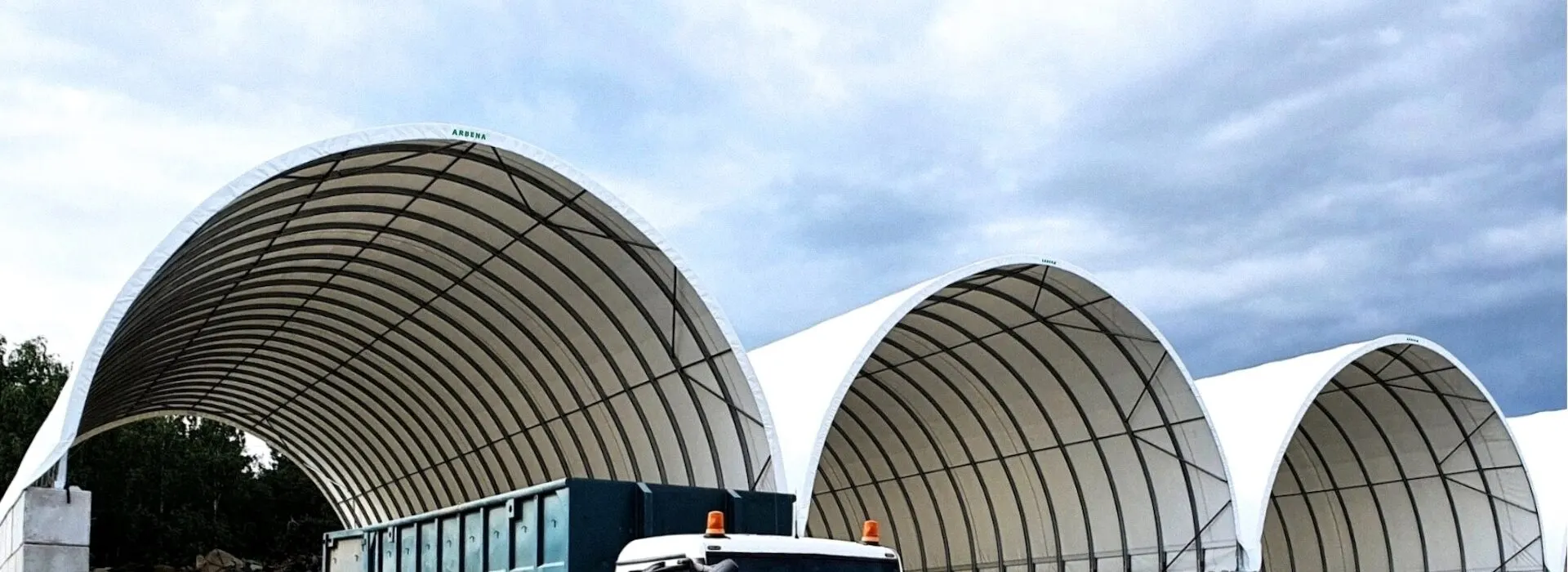
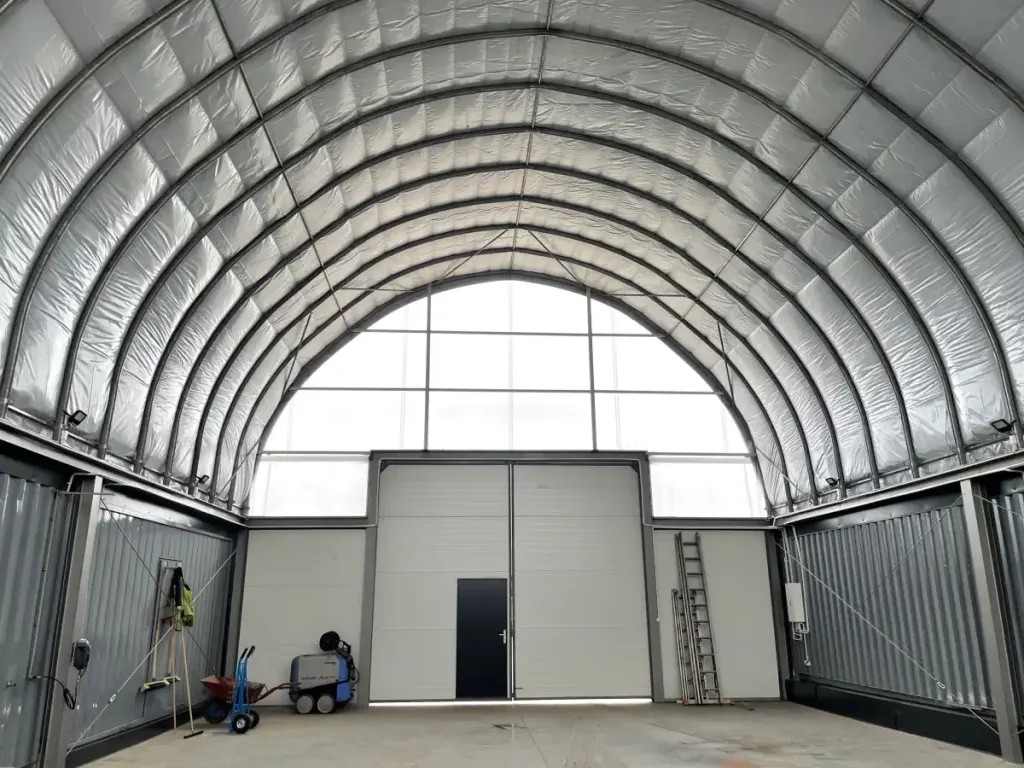
A container canopy uses two shipping containers placed in parallel as its base. Steel arches are fixed to the top edges of the containers and covered with a PVC membrane that resists UV radiation, rain and snow loads. The result is a stable, weather-protected covered space between the containers.
The solution is used in many sectors: as quick storage space in logistics and transport, as a store for equipment and materials on construction sites, as extra production, workshop or garage space in industry, and in agriculture to shelter machinery or protect crops.
It is easy to install and dismantle, and the canopy can be moved to another site together with the containers.
What does a container canopy cost, and when does it pay off?
The cost depends mainly on the area to be covered, the frame, the arch spacing, the type of membrane and the snow and wind loads at the site. In many cases the investment is considerably lower than for a conventional steel or masonry building, while the covered space fully meets the user’s needs.
A container canopy is usually most cost-effective when:
- you need space for a limited period,
- the building has to be movable or quick to dismantle,
- demand is seasonal, for example extra storage at peak times,
- you want a durable solution that is easy to adapt,
- you want to keep the investment cost down.
How companies use container canopies
- Construction: a mobile tool workshop directly on site, with safe storage for equipment wherever the project is. See construction sites.
- Recycling: covered storage that protects recyclable materials from rain and helps maintain their quality. See waste and recycling.
- Transport and logistics: covered transhipment zones and extra storage for seasonal peaks.
- Agriculture: protection for crops and machinery against moisture, sun and sudden changes in the weather. See machinery storage.
One of our projects covered a municipal waste collection point in Poland with two container canopies of 9 × 12 m each. Over the years they have served as a covered working area, cover for waste containers, a transhipment point and a storage area, depending on the operator’s needs.
How durable is a container canopy?
Container canopies are designed for wind, snow and rain. The steel frame carries the loads, and the containers form a heavy base to which the structure is anchored. The membrane is resistant to weather and UV radiation. Gutters and side curtains can be added to make the space even more practical.
Do you need a permit?
The answer depends on the country and the municipality, and often on how long the canopy will stand. In many places a structure intended for a limited period follows a simpler procedure, while long-term use may require a permit. Check the local requirements before ordering; we can provide the technical documentation.
Why an arch roof?
Several roof shapes can be built on containers, but the arch is the most popular. Snow and rainwater run off it more easily, the arch distributes forces efficiently, and it gives more usable height across the width of the space.
Summary
A container canopy combines quick installation, a moderate investment cost and the option to adapt or move the structure later. It works best where time matters, where the space is needed seasonally or for a limited period, and where a conventional building is not practical on the site.
Thinking about covering containers? Tell us the container size, location and intended use, and we will propose a suitable canopy.